Creative Therapies
Alternative methods of identifying and expressing emotions for youth at Hoffman Homes.
Creative Therapies at Hoffman Homes offer alternative methods of identifying and expressing emotions.
Art Therapy, Animal-Assisted Therapy, Drama Therapy, and Equine-Assisted Therapy are offered to students in 10-week cycles.
Participation is voluntary.
Art Therapy
The goal of Art Therapy is to provide youth and young adults knowledge about art in a non-threatening environment. Using individual creativity, individuals learn responsibility, safe coping strategies, and learn/strengthen skills while expressing themselves artistically. They are able to enhance self-esteem, promote identity formation, manage stress, and support overall well-being.
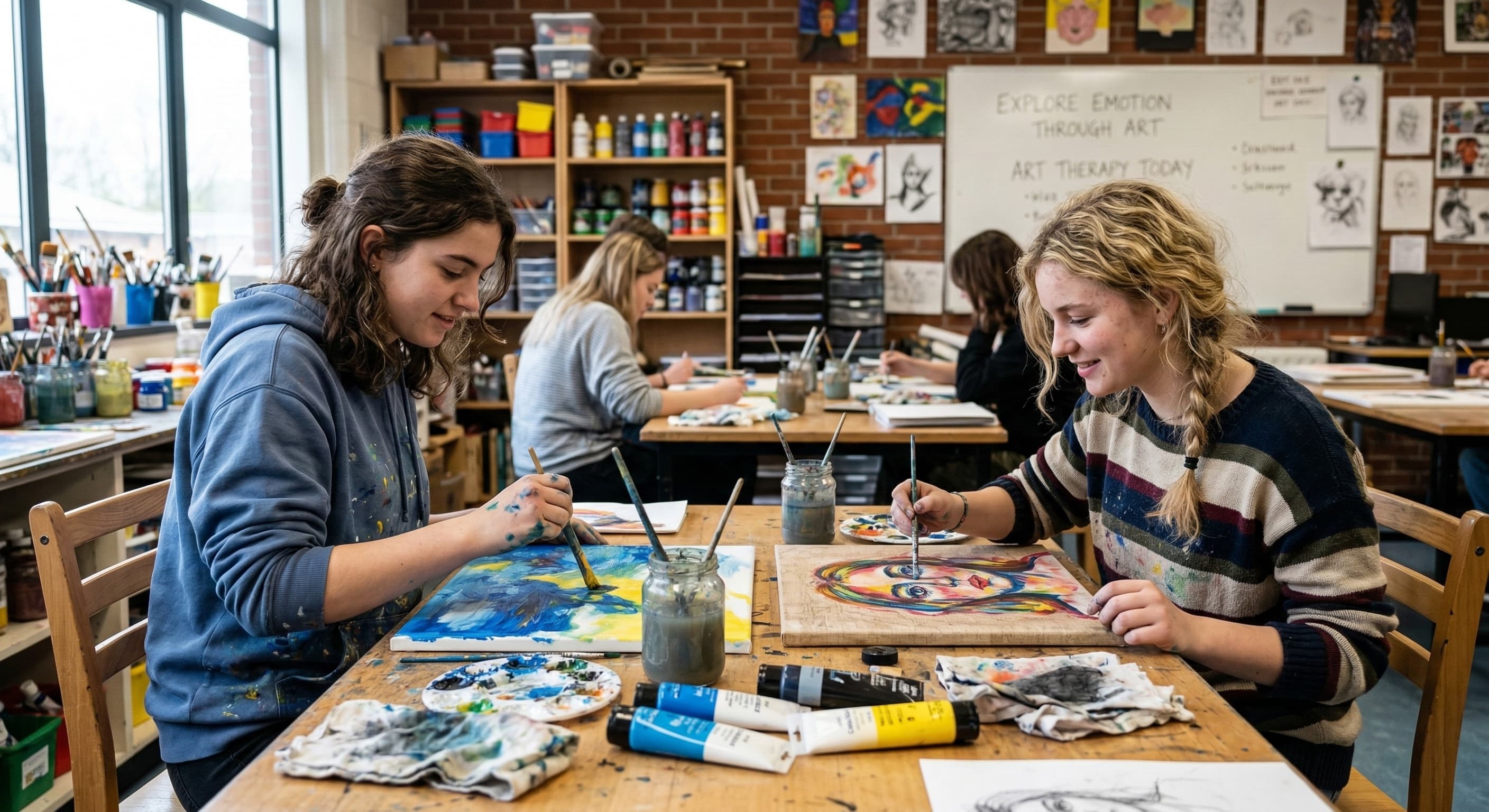
Individuals in our care have the opportunity to experience Art Therapy in groups as well as individual therapy based on treatment goals and individual needs. Many enjoy an open studio approach in which they are permitted to utilize materials of their choosing. Different art mediums are offered that include but are not limited to photography, pottery, crafts, sewing, collage, drawing, painting, jewelry making, papier-mâché, and creative writing.
By participating in Art Therapy, the individual will learn a variety of skills, which support their treatment goals, and that they can utilize during and after residential treatment. Many have expressed feelings of pride and confidence in their artwork and themselves.
People get to know the real you.
Hoffman Homes Student
You have fun doing what you love. You express yourself through art.
Hoffman Homes Student
Art is like your life path. Color it each step.
Hoffman Homes Student
I like how everyone can get really creative.
Hoffman Homes Student
You can express yourself in positive ways and get your feelings on paper and most importantly HAVE FUN!
Hoffman Homes Student
Animal-Assisted Therapy
The Animal-Assisted Therapy Program at Hoffman Homes gives those in our care the opportunity to learn about and interact with a variety of therapy animals. Each session begins with a therapeutic activity to help facilitate discussion. The session moves on to caring for the animals, feeding and cleaning cages, and ends in “free time” with an animal of their choosing. During this time, participants often feel relaxed and comfortable enough to share more about their history, behavior, and treatment goals.
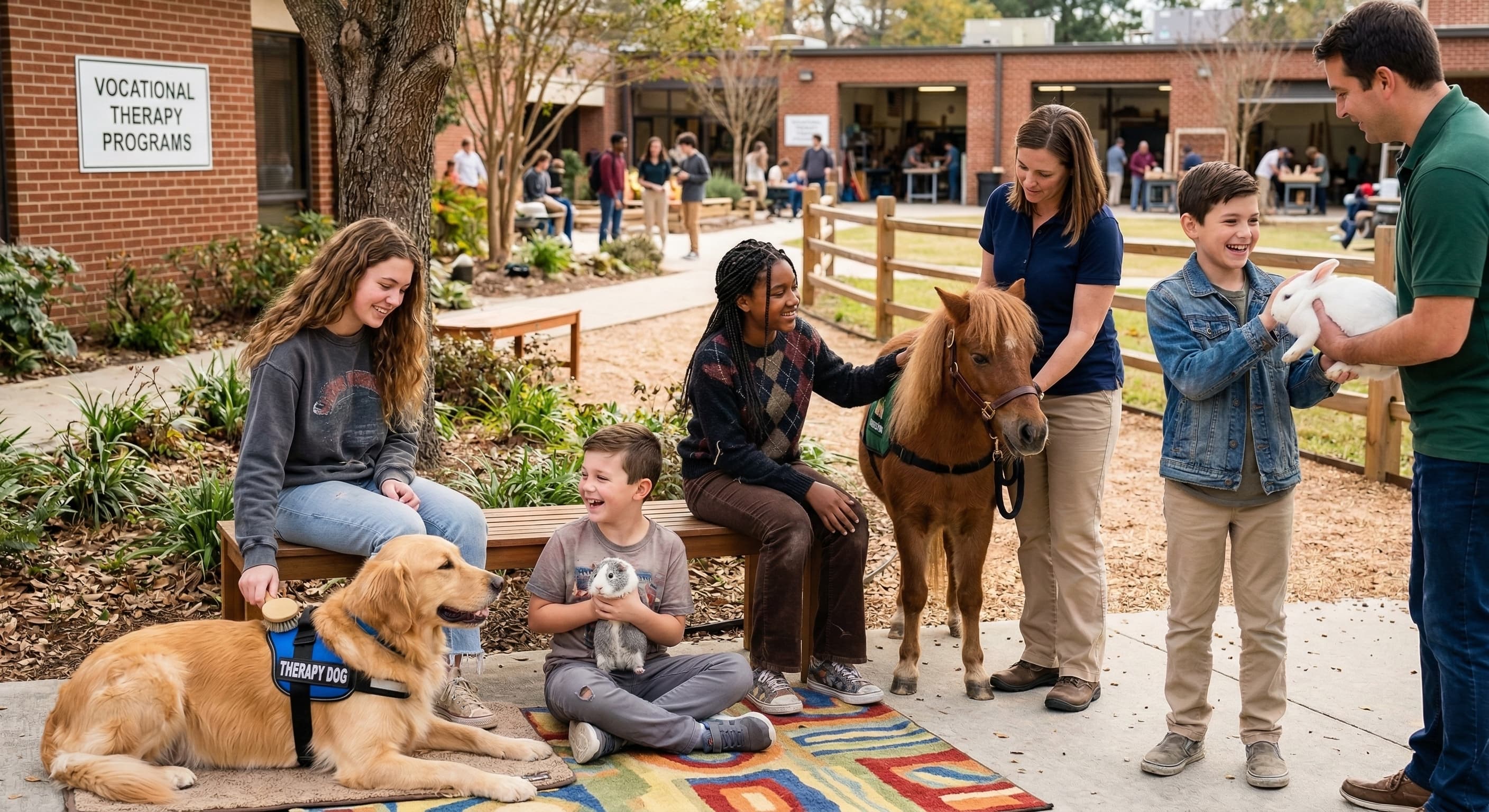
Animals and their behavior are used as metaphors for real-life situations. Animal-Assisted Therapy addresses flight, fight, freeze response, and herd instinct. It addresses how humans and animals are alike and different in their responses to danger and safety. The individual is asked to create a safe environment for themselves and the animals, encouraging social interaction and problem-solving. The goals of Animal-Assisted Therapy are to help the participant develop respect toward other living things, learn how to maintain safe and appropriate behavior around animals, develop coping and relaxation skills, enhance communication and social skills, cooperate with others, and develop a sense of self-worth.
The animals help me feel happy and lovable.
Hoffman Homes Student
I feel safe in pet therapy.
Hoffman Homes Student
Taking care of the animals helps me take care of myself.
Hoffman Homes Student
I learned that I am good with animals, patient with them, and animals can trust me.
Hoffman Homes Student
I learned that I can make a difference and that I am not worthless.
Hoffman Homes Student
Drama Therapy
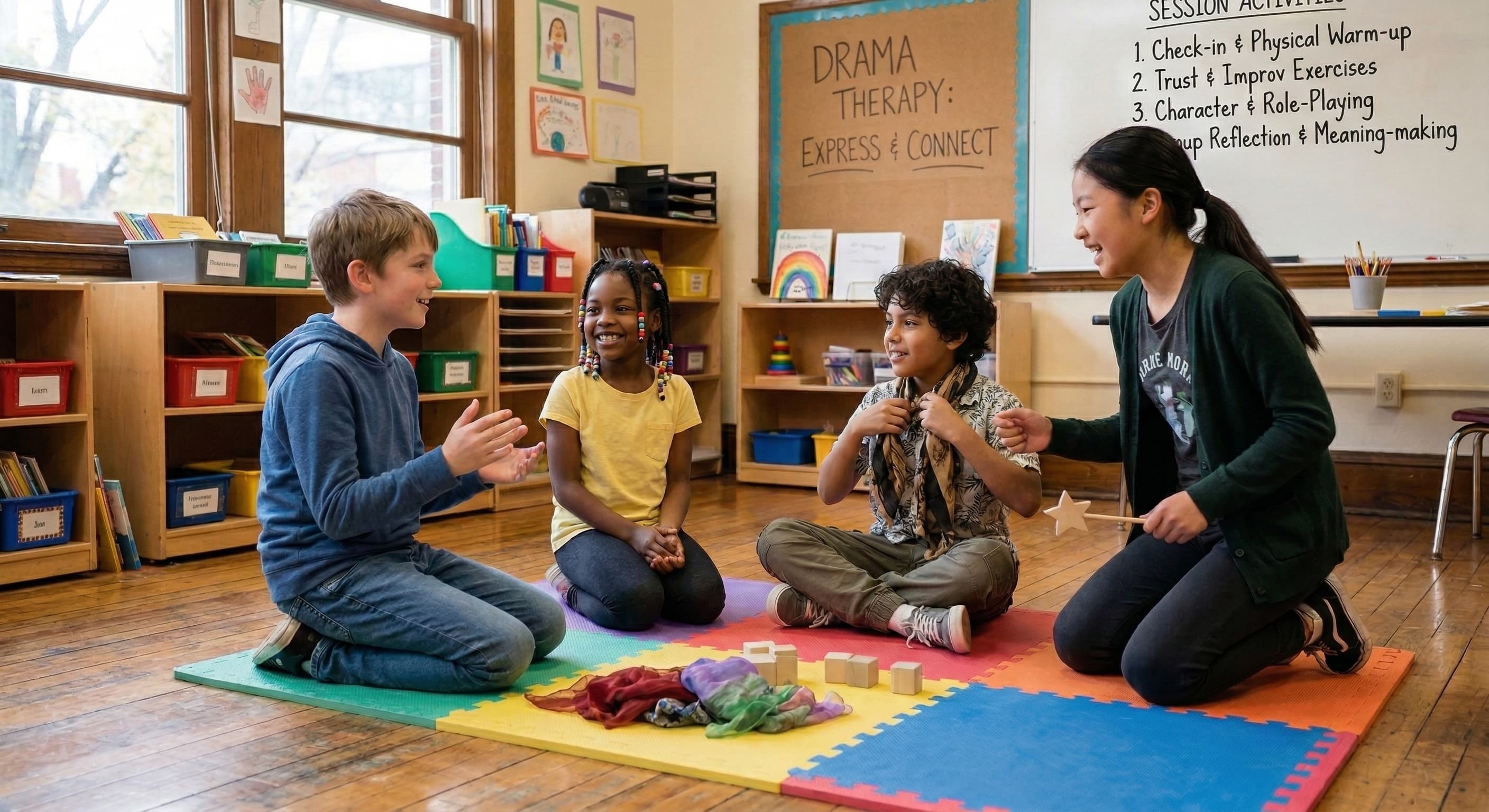
Drama Therapy utilizes theatre warm-ups and games, storytelling, embodiment, and role-play to guide participants through an action-oriented group therapy. Participants establish and build cohesion with other group members, improve their ability to express themselves in new ways, develop insight, rethink, and work through problems in a more suitable way.
Each session contains a check-in, warm-up, main activity, and closure. Playful interaction and character work allow participants to become more comfortable working with each other. Eventually more intensive role-play and psychodrama enactments allow themes to be explored and restructured for the purpose of healing.
Here at Hoffman, Drama Therapy aims to allow individuals unique and creative ways to conceptualize problems in their lives and the stories that surround them while providing opportunities for them to suitably restructure and recreate those stories by accessing the healing powers of theatre, drama, and play. Therapists are certified via the North American Drama Therapy Association (NADTA).
Equine-Assisted Therapy
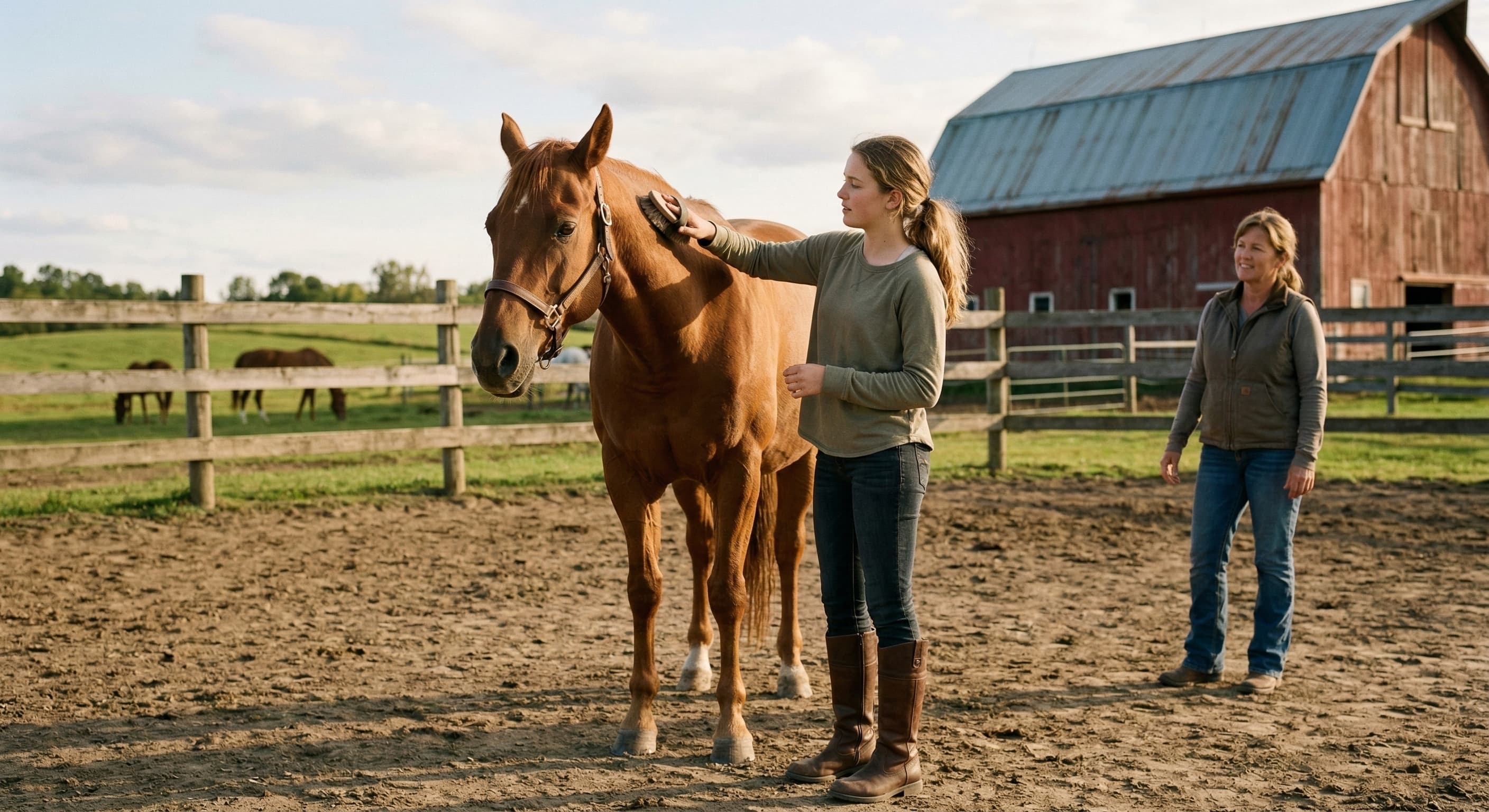
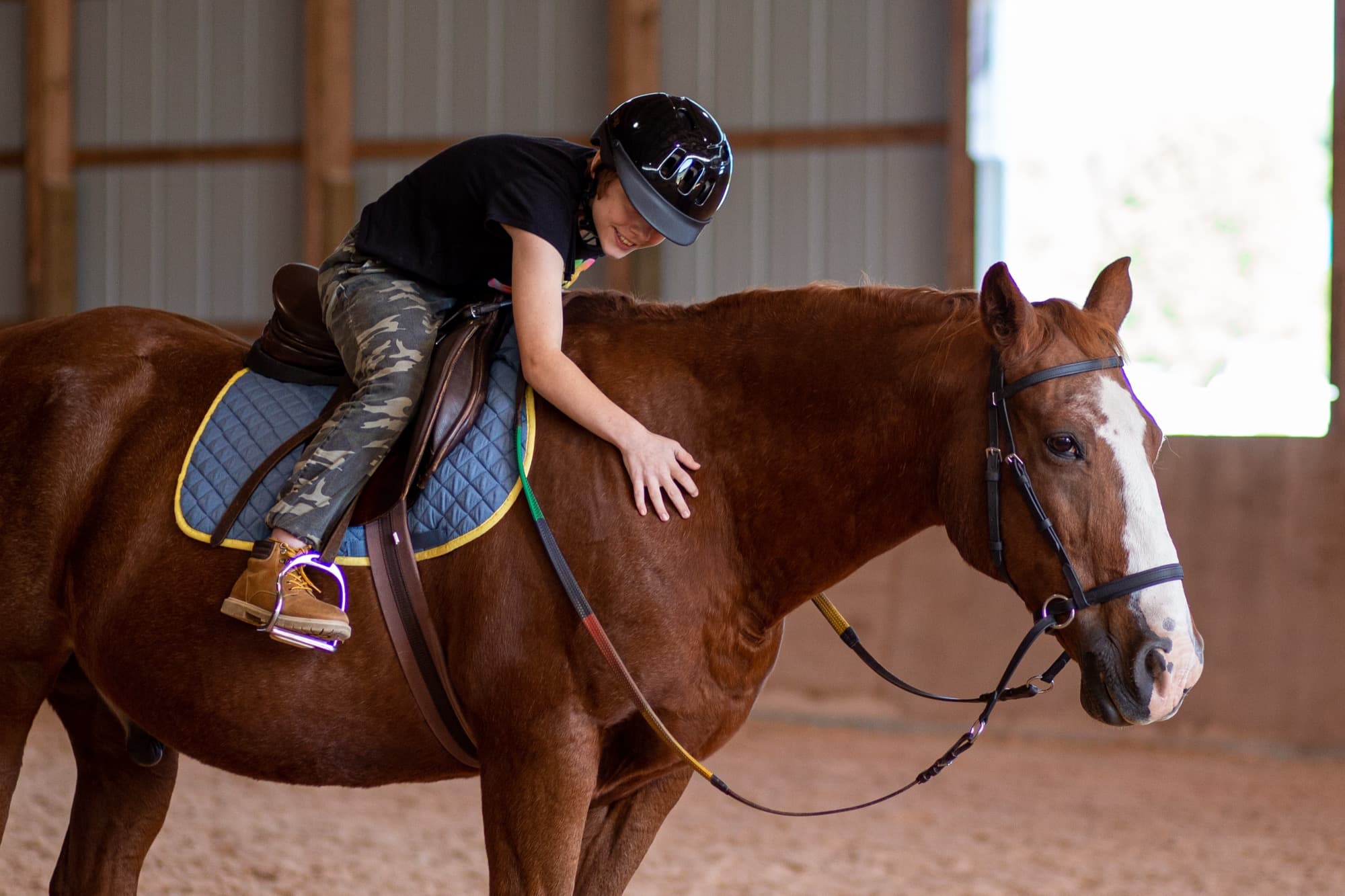
Those participating in Equine-Assisted Therapy groups learn to work safely and appropriately with their peers and the horses while developing their horsemanship and riding skills. Sessions begin with group activities such as grooming, leading, and groundwork games to allow participants to become familiar with the horses. Participants transition into mounted activities when they are able to display safe handling techniques from the ground.
Individuals participating in barn management groups have the opportunity to learn how to appropriately care for and safely handle the horses in a non-threatening environment. They are taught about the basic needs of the horse, such as health care, dietary needs, and first aid. Required barn chores include sweeping and preparing grain to ensure that the horses and people have a clean and safe space to enjoy. Working with the horses teaches responsibility and social skills while enhancing empathetic skills.
Equine-Assisted Therapy offers a variety of physical and emotional benefits including leadership skills, developing self-confidence, teaching impulse control, building and maintaining trusting relationships, developing awareness of non-verbal communication, and creating a sense of pride. Physical benefits also include improving balance, teaching body awareness, building core strength, and improving flexibility.
When I’m around Stitch and the other horses, they make me feel like who I want to be. I can be myself around them.
Hoffman Homes Student
The horses don’t boss me around like some bullies have done to me.
Hoffman Homes Student
It took away things I was worrying about and got my mind on something else.
Hoffman Homes Student
Horse therapy makes me happy.
Hoffman Homes Student
I like that you get to take care of the horses. You don’t just ride a horse you learn to take care of them. I feel really excited to work with a horse every week because it’s really fun.
Hoffman Homes Student
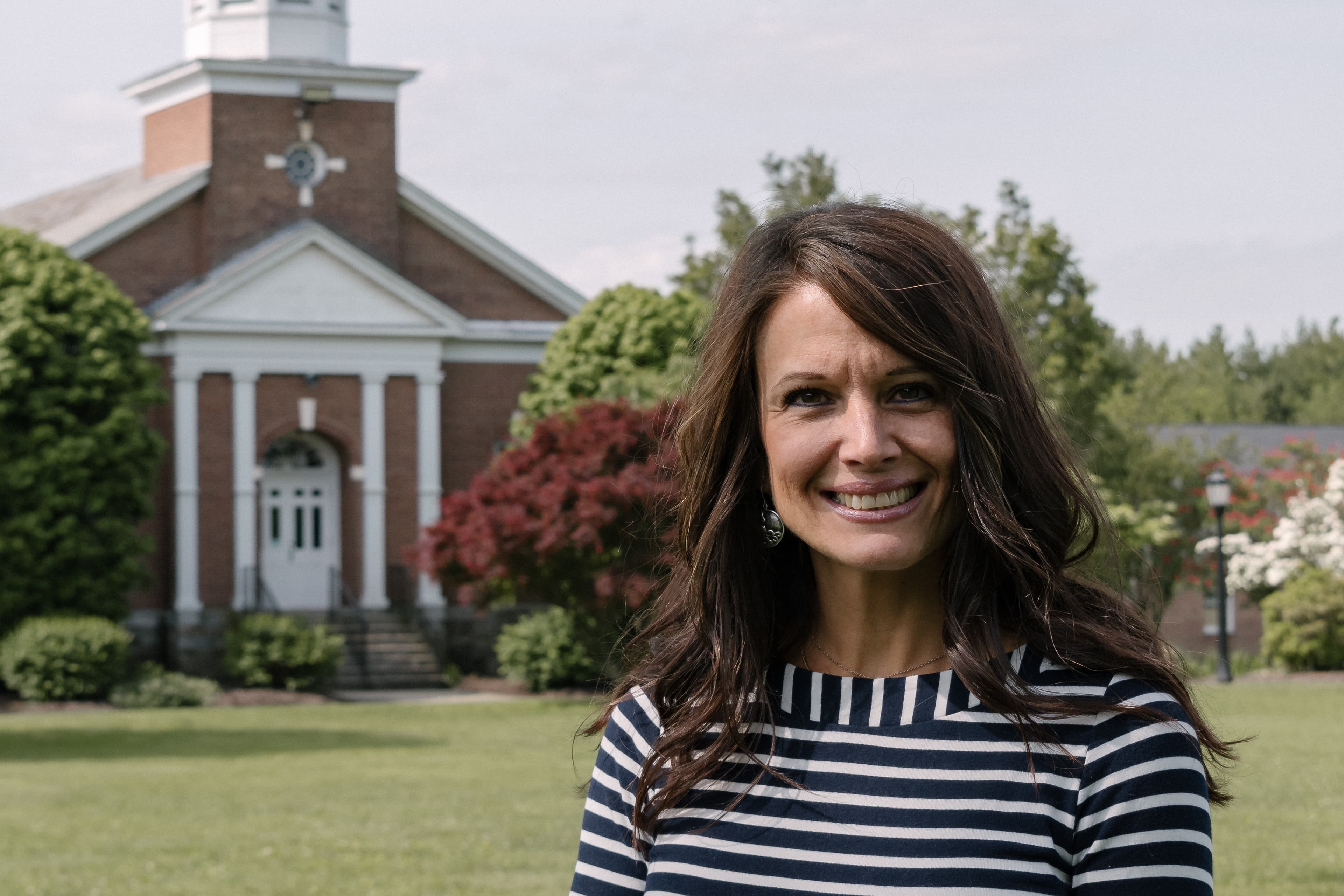
Jennifer Sepic, MA, NCC
Director of Creative Therapies & Animal-Assisted Therapy Coordinator
Leading Hoffman Homes' creative and animal-assisted therapy programs.
jsepic@hoffmanhomes.com